
TITLE: LLM-assisted RWE analysis in R
SPEAKER: Garrett Grolemund, Posit, Phil Bowsher, Posit, and Esteban Jenkins, Organon
Moderator: Wenjin Wang
Abstract:
Large Language Models (LLMs) can help you quickly write code, draft reports, and build interactive applications. In this hands-on workshop, you’ll use an LLM to do a preliminary analysis of real-world evidence (RWE) data and to build three deliverables: a written report, an HTML dashboard, and an interactive app with a built-in AI chatbot for querying the data and findings.
Working in R within Positron (a fork of VS Code built for data scientists), participants will solve a common and important question: Is there enough data, in the right subgroups, to support the study we want to design? Along the way, we’ll cover practical skills that matter beyond the workshop itself: writing effective LLM prompts, tracking token usage, and monitoring code execution so that LLM-assisted work stays methodologically sound and reproducible.
Basic familiarity with R is recommended; no prior LLM experience is needed. We’ll provide a cloud-based compute environment, pre-provisioned with AI API keys, so participants can get straight to work on the day of the workshop. We will rely solely on Positron’s Posit Assistant client, which is designed to use any model provider on the backend, so you can reproduce the lessons of the workshop *as is,* with the model providers you are permitted to use.
Outline
- The motivating example. How can we tell whether enough RWE data exists across subgroups to support a study design built around those subgroups?
- A quick review of R. A refresher to make sure everyone has the footing they need.
- Writing R with an LLM. Use an LLM to write R functions and scripts.
- From analysis to report. Use an LLM to write a Quarto report, then render it into an HTML dashboard.
- Building an app. Use an LLM to build a Shiny app around the analysis.
- Adding a chat interface. Use Querychat to add an LLM-powered chat session to the Shiny app.
- Sharing the work. Publish the Shiny app and configure it to communicate with an LLM in production.
Instructors’ Biography:
 Garrett Grolemund, Director of Learning, Posit PBC (formerly RStudio)
Garrett Grolemund is the Co-Author of R for Data Science, the creator of the Lubridate R package, and an ASA award-winning educator. For over a decade, he has helped data scientists learn to analyze data with R’s Tidyverse and build interactive apps with R’s Shiny framework.
 Phil Bowsher, Director of Healthcare and Life Sciences, Posit PBC (formerly RStudio)
Phil Bowsher is the Director of Healthcare and Life Sciences at Posit/RStudio and co-founder of the R in Pharma gathering. Phil is a published author, keynote deliverer and award-winning speaker, having given over 100 open source talks and workshops in 5 countries to an estimated 20,000 people. His work focuses on innovation in the pharmaceutical industry, with an emphasis on interactive web applications, reproducible research and open-source education.
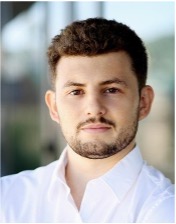 Esteban Jenkins, Associate Director of Data Science and AI/ML, Organon
Esteban Jenkins is Associate Director on Organon’s Enterprise Data and Analytics team, leading the Advanced Analytics area where he focuses on building modern data science and machine learning capabilities and use cases to deliver value across the various business functions.